Africa Reshapes Global Mining: A Pivotal Decade for Critical Minerals.

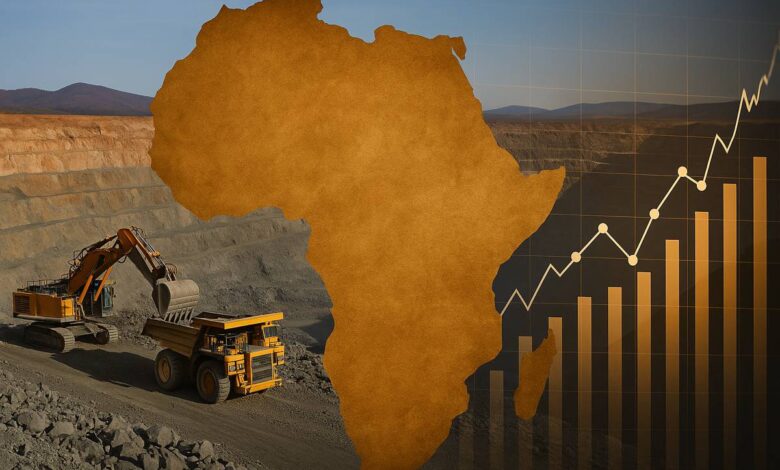
Africa is no longer merely a source of traditional commodities like gold and diamonds; it has become the central, indispensable player in the global energy transition. As the world races toward electrification and decarbonization, the continent’s vast, largely untapped reserves of critical minerals—essential components for electric vehicle batteries, solar panels, and wind turbines—are fundamentally reshaping global supply chains and attracting a new wave of strategic investment.
The narrative of African mining is shifting from mere resource extraction to value creation and geopolitical leverage, marking a profound change for the decade ahead.The Epicentre of the Energy TransitionThe global push for Net Zero emissions has catapulted certain African nations into strategic prominence.

Image credits: https://highways.today/2025/05/24/african-mining-week
The continent is home to an extraordinary share of the world’s most vital metals, giving it unprecedented leverage in international markets.
Meanwhile, countries like Zimbabwe and Mali are rapidly gaining attention for their substantial lithium deposits, essential for the overall battery structure. This concentration of resources means that for any major global power to execute a successful green transition, a stable partnership with Africa is non-negotiable.
The Investment Shift: From Extraction to Value Addition. The most significant trend reshaping Africa’s mining landscape is the decisive push toward local value addition, or beneficiation. African governments are increasingly moving to ban or heavily tax the export of raw ore, demanding that processing, smelting, and refining activities occur within their borders.
This policy shift is driven by the desire to capture a larger share of the value chain, which translates into higher export revenues, local industrialisation, and job creation. Exporting raw bauxite, for example, generates far less revenue than exporting refined aluminum. Initiatives like the DRC and Zambia’s joint efforts, supported by the African Development Bank, to build a regional battery precursor supply chain exemplify this shift, aiming to transform mined copper and cobalt into semi-finished battery components on the continent.
For investors, this means the traditional model of simply digging and shipping is obsolete. Future investment must be aligned with national industrialisation strategies, focusing on funding local processing plants and the associated infrastructure (power, water, logistics).
Geopolitics and the Scramble for Supply Chain Security. The concentration of critical minerals has intensified geopolitical competition across the continent. What was once primarily a commercial pursuit is now a strategic imperative for global economic powers:China’s Dominance: Having secured a commanding position over the past two decades—controlling the bulk of African cobalt and refining capacity—China remains the largest single investor.Western Re-engagement:
The US, UK, and European Union are rapidly increasing their diplomatic and financial engagement to diversify their supply chains away from current concentrations. This is manifesting in infrastructure projects, such as the development of the Lobito Corridor which provides a new Atlantic export route for minerals from the DRC and Zambia.
The UK’s Green Growth Compact with Zambia, pledging billions in private sector investment for mining and renewables, further underscores this strategic competition.Middle East and Others: New players, including UAE-based firms, are entering the fray, enhancing investments in countries like Ethiopia, Mali, and Zambia, demonstrating the diversified global interest in African resources.
Challenges and the Path to Sustainable Growth. While the potential windfall is immense—with estimated revenues from just four key battery minerals potentially totaling $16 trillion globally over the next 25 years—the road ahead is not without significant hurdles.
The primary challenges for the decade ahead include:Infrastructure Deficits: A lack of reliable power, rail, and port capacity continues to hinder efficient operations and raise the cost of capital.Governance and Stability: Concerns over policy stability, regulatory transparency, and corruption remain a barrier to long-term, large-scale investment, necessitating strengthened regulatory frameworks and public-private partnerships.ESG Compliance:
Investors are applying intense scrutiny regarding Environmental, Social, and Governance (ESG) standards. Future investments must demonstrate verifiable commitments to decarbonization, community benefit, and ethical sourcing to gain access to international capital markets.Ultimately, Africa is at a critical juncture.
By leveraging its mineral wealth, adopting forward-thinking policies that prioritise local processing, and navigating the complex geopolitical landscape, the continent can move beyond being a mere supplier of raw materials to become a powerful, industrialised hub that defines the global energy future. The mining investment trends of the 2020s and 2030s will determine whether Africa fully captures this generational opportunity for sustainable economic transformation.